Dynamic vs Static QR Codes: Which is Right for Your Business in 2026?
Comprehensive comparison of dynamic and static QR codes. Learn when to use each type, cost analysis, feature differences, and real-world business applications.

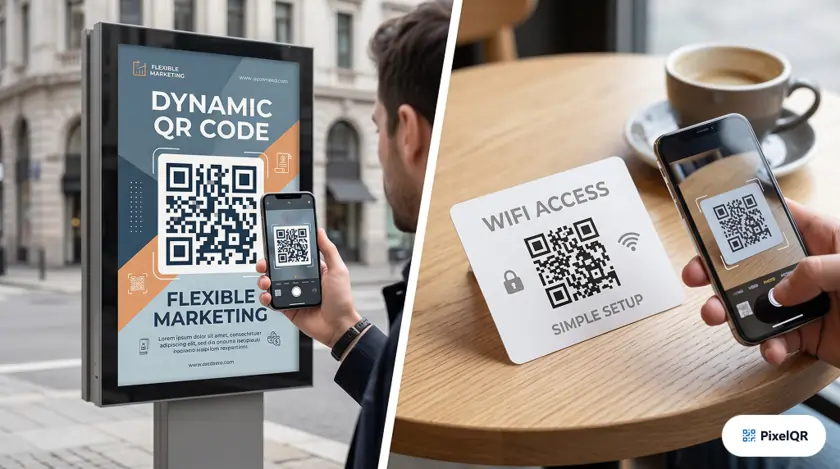
Choosing between dynamic and static QR codes is one of the most important decisions for your QR strategy. This decision impacts your budget, analytics capabilities, flexibility, and long-term ROI. This comprehensive guide breaks down everything you need to know to make the right choice for your business in 2026.
Quick Comparison: Dynamic vs Static
| Feature | Dynamic QR | Static QR |
|---|---|---|
| Editable After Printing | Yes | No |
| Scan Analytics | Yes | No |
| A/B Testing | Yes | No |
| Retargeting | Yes | No |
| Works Offline | No | Yes |
| Free Forever | No | Yes |
| Typical Cost | $9–29/month | $0 |
| Best For | Marketing, campaigns, business | WiFi, vCards, permanent links |
What Are Dynamic QR Codes?
Dynamic QR codes use a short redirect URL that points to your actual destination. This intermediary layer enables powerful features that static codes simply cannot offer.
When a user scans a dynamic code, the flow is: scan → redirect server processes the request → analytics are captured → user reaches the destination. You control the destination from a dashboard without changing the printed image.
Key Dynamic QR Features
What Are Static QR Codes?
Static QR codes directly encode your content into the code itself. There is no intermediary server—the data is permanently embedded in the pattern.
When a user scans a static code, the flow is: scan → data decoded instantly → content displayed. No redirect hop, no server dependency for the scan itself.
Key Static QR Benefits
When to Use Dynamic vs Static
Choose Dynamic When...
- Marketing Campaigns — Track ROI, test variations, and optimize based on data.
- Print Advertising — Billboards and magazines where reprinting is expensive.
- Product Packaging — Update promotions without changing packaging.
- Restaurant Menus — Change daily specials and prices instantly.
- Business Analytics — When tracking and measurement are essential.
Choose Static When...
- WiFi Access — Guest credentials that will not change frequently.
- Digital Business Cards — vCard with permanent contact information.
- App Downloads — Direct App Store or Play Store links.
- Personal Use — When analytics are not needed.
- Budget Constraints — When cost is the primary concern.
3-Year Cost Comparison
Static QR Code
Free forever
- No monthly fees
- No scan limits
- No expiration
- No tracking capabilities
Dynamic QR Code (Pro Plan)
$15/month × 36 months
- Unlimited edits
- Full analytics dashboard
- A/B testing capability
- Retargeting pixel support
While dynamic QR codes have a cost, the analytics and optimization capabilities often deliver 10–50X ROI for marketing campaigns. A single insight from scan data can save thousands in wasted ad spend.
Quick Decision Framework
-
Will the destination URL change?
Yes → Dynamic | No → Either works, continue to question 2 -
Do you need to track scans and measure ROI?
Yes → Dynamic | No → Continue to question 3 -
Does it need to work offline (WiFi, vCard)?
Yes → Static | No → Continue to question 4 -
Is this for business or marketing purposes?
Yes → Dynamic (analytics become valuable even without immediate need) | No (personal use) → Static
Frequently Asked Questions
Can I convert a static QR code to dynamic?
No, you cannot convert between types. The encoding method is fundamentally different. If you need dynamic features, you will need to generate a new dynamic code and reprint.
Do dynamic QR codes work if the service goes down?
Dynamic codes depend on the redirect server. Choose a reliable provider with high uptime guarantees. PixelQR maintains 99.99% uptime for all dynamic redirects.
Which type scans faster?
Static codes are marginally faster since there is no redirect. However, modern dynamic code services add less than 100ms latency—imperceptible to users.
Create Both Types with PixelQR
Whether you need powerful dynamic QR codes with analytics or simple static codes for personal use, PixelQR has you covered.